
HOA Hurricane Insurance Checklist: A Storm-Ready Readiness Guide for Condo & HOA Boards
Hurricane season is here. The easiest way to avoid insurance surprises is to get your association’s coverage details and response plan organized before the first watch or warning. The most stressful claims aren’t always from the biggest storms—they’re the ones where the board is scrambling to answer basic questions during the first 24–72 hours.
This guide is for HOA boards, condo boards, and community managers who want a clear, practical way to reduce budget shocks, speed up recovery, and keep owners informed.
Why “having insurance” isn’t the same as “being ready”
Most associations have property and liability coverage. Readiness is different: it’s about speed, clarity, and documentation—because after a storm, time and confusion are expensive.
- Deductibles that weren’t understood (especially percentage-based named storm deductibles)
- Missing policy pages/endorsements when lenders, owners, or adjusters request proof
- Unclear responsibility (association vs. owner), especially for interior repairs in condos
- No pre-set plan for mitigation, vendor authorization, or documentation
You don’t need to become an insurance expert overnight. You do need a simple system that makes your next storm response smoother.
1) Confirm storm deductibles (and translate them into plain English)
The #1 post-storm surprise is the deductible—particularly when a named storm deductible is a percentage rather than a flat dollar amount.
At a minimum, confirm these deductibles:
- Named storm deductible (often a percentage)
- Wind/hail deductible (may be separate from named storm)
- All Other Perils (AOP) deductible
Then confirm exactly what the percentage applies to under your policy structure. Your board should be able to state one consistent sentence:
“If a named storm causes covered damage, our deductible is X% applied to ______.”
Pro move: create a one-page deductible summary you can share with the board, management team, and owners. This prevents conflicting answers during the first post-storm week.
2) Clean up your building profile: roof + exterior details matter
After a storm—and often before one at renewal—carriers and adjusters may request basic building facts. If the information on file is incomplete or inconsistent, it can slow decisions and create claim friction.
Make sure you have these items documented and easy to access:
- Roof type, age, and replacement history
- Roof deck/framing type (document and keep on file)
- Exterior cladding type(s) (document and keep on file)
- Major renovation history with supporting documents (contracts, invoices, photos, warranties)
3) Align expectations for wind exposure and building performance
Wind exposure and building-code considerations can drive questions about exterior components such as roof coverings, wall coverings, windows, doors, and cladding.
Boards don’t need engineering-level detail, but you should be able to show:
- What has been upgraded (roof, windows/doors, exterior envelope)
- When the work was completed and by whom
- Proof that supports the building’s risk profile (photos, warranties, contractor scope)
4) Condos: clarify “who covers what” before the first interior water loss
Hurricanes often produce water intrusion, and interior damage is where confusion and conflict spike—especially in condominiums.
Create a simple, written snapshot that explains:
- What the association insures/maintains under the master policy intent
- What owners should insure under their HO-6 (personal property, improvements/betterments, loss assessment)
- How deductibles can affect the association and/or owners in a real event
If owners don’t understand this before a storm, they will learn it during the worst week of the year.
5) Pre-plan mitigation and decision authority (the first 24–72 hours matters most)
Delaying mitigation can turn a manageable loss into a major rebuild. Your response plan should remove bottlenecks before they happen.
A storm-response plan should include:
- A current emergency contact list (board, manager, preferred vendors)
- Pre-set spending authority (who can approve emergency mitigation—and up to what amount)
- Shutoff locations and an access plan (water/electrical)
- A documentation workflow (photos, dates, unit/building tracking, and a centralized folder)
6) Build a “Storm-Ready Insurance Packet” so you can respond in minutes
Create one folder that can be shared quickly with board members, adjusters, lenders, and vendors. When a storm approaches, being able to send this packet immediately reduces stress and prevents delays.
Minimum contents:
- Property & liability declarations pages
- Key endorsements (named storm, wind/hail, ordinance or law, etc.)
- One-page deductible summary
- Building/location schedule (if applicable)
- Claim reporting instructions and carrier contacts
- Condo responsibility snapshot (if applicable)
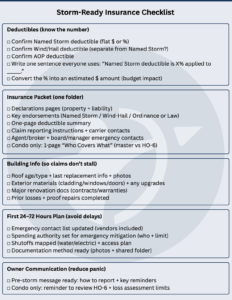
Download the printable checklist (PDF)
If you want a clean board tool you can print or share, use the Archer Storm‑Ready Checklist. It’s designed to help your team confirm deductibles, organize documents, and set decision authority before the first storm.
FAQs HOA Boards and Condo Boards Ask Before a Storm
What is a named storm deductible?
A named storm deductible is commonly triggered when a storm is officially designated and can be a percentage deductible. The key is confirming what the percentage applies to under your policy so you can estimate the real dollar impact.
Is wind/hail the same as a named storm deductible?
Not always. Some policies treat wind/hail as a separate deductible, while named storm deductibles may apply only when the named storm trigger is met. Confirm both and document them in plain English.
In condos, who pays for interior repairs after storm water intrusion?
It depends on your governing documents and the master policy intent. That’s why a written “who covers what” snapshot—master policy vs. owner HO‑6—is essential before hurricane season.
What should we do first after a storm to protect the claim?
Prioritize safety, stop active water intrusion when possible, and document conditions immediately (photos/video with date/time). Then follow your claim reporting instructions and begin mitigation within your board’s pre-set authority.
Next step
If you’d like a second set of eyes on deductibles, policy documents, or condo responsibility language, an insurance readiness review can help your board walk into hurricane season with clarity—before it’s urgent.